
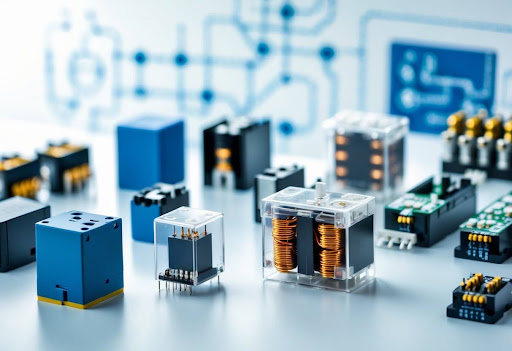
A relay is an electrical switch that uses a low voltage signal to control a higher voltage circuit. It allows one circuit to turn another circuit on or off while keeping the two circuits electrically isolated. This makes relays essential in many electronic and electrical systems where control and protection are needed.
Relays come in different types, such as electromechanical relays, solid-state relays, and thermal relays. Each type works using different principles and suits specific tasks. Understanding how relays operate helps in choosing the right one for applications like motor control, automation, and electrical protection.
Their ability to safely control high power with low power signals makes relays valuable in industrial, automotive, and home electronics. Knowing about relay types and functions can improve the design and reliability of electrical systems.
What Is a Relay and How Does It Work?
A relay is an electrically operated switch used to control a circuit by a low-power signal. It isolates different parts of a system while allowing one circuit to turn another on or off. The device uses electromagnetic principles to move contacts and control electrical flow with precision.
Definition and Function of a Relay
A relay is a device that uses an electric current to open or close circuits mechanically. It acts like a switch but is controlled by electricity rather than by hand. When a small current flows through its coil, it generates a magnetic field.
This magnetic field moves a part inside the relay called the movable armature. The armature either opens or closes the relay contacts, allowing a larger current to pass through a separate circuit. Relays are essential for controlling high-power devices safely using low-power signals.
Key Components and Construction
The main parts of a relay include the coil, contacts, movable armature, frame, and yoke. The coil is a wire wound around an iron core. When energized, it creates a magnetic field.
The movable armature sits near the coil and moves when the coil is energized. Contacts are metal pieces that connect (close) or disconnect (open) the circuit. They come in different types such as normally open (NO) or normally closed (NC).
The frame holds all parts together, and the yoke helps direct the magnetic field. These components work to switch the contacts quickly and reliably.
Working Principle of Relays
Relays work on the principle of electromagnetic induction. When an electric current flows through the relay coil, it produces a magnetic field.
This magnetic field pulls the movable armature towards the coil. The movement causes the relay contacts to change state: NO contacts close, and NC contacts open. This switching allows current to flow through the connected load or stops it.
When the coil is de-energized, a spring inside the relay pulls the armature back to its original position, resetting the contacts. This mechanism enables the relay to control larger currents through a small electrical input.
Electrical Isolation and Signal Control
One key feature of relays is electrical isolation. The coil circuit and the load circuit are separate. This prevents high voltages or currents in the load from affecting the control circuit.
The relay allows a low-power signal to safely control high-power equipment. This isolation protects sensitive electronics from damage and reduces the risk of electrical shock.
Additionally, this separation enables relays to serve in complex control systems where signals and power levels must be kept independent while maintaining reliable switching.
Relay Types and Classification

Relays vary in design and function to suit different electrical tasks. Their use depends on factors like speed, durability, current type, and specific circuit needs. Understanding these types helps in choosing the right relay for a task.
Electromechanical Relays
Electromechanical relays (EMRs) operate using a coil and moving contacts. When the coil receives a low-power signal, it creates a magnetic field that moves a switch inside the relay. This switch opens or closes a circuit, allowing or stopping current flow.
EMRs can have different contact types, such as SPST (Single Pole Single Throw) and DPDT (Double Pole Double Throw). SPST controls one on/off circuit, while DPDT can switch two circuits between two states.
One downside of EMRs is mechanical wear. Moving parts can degrade over time, causing slower response and less reliability compared to solid-state types. Still, they are widely used because they work well with high currents and voltages.
Solid-State Relays
Solid-state relays (SSRs) use semiconductor components instead of moving parts. These devices switch circuits electronically, using optical signals or other low-power inputs to control high-power loads.
SSRs operate faster and last longer since they have no physical contacts that wear out. They also avoid issues like contact arcing found in mechanical relays. However, SSRs generate heat during operation, often requiring heat sinks or cooling.
They come in various contact types similar to EMRs, like SPDT and SPST, but excel in applications needing fast, silent switching. SSRs are common in automation, where frequent switching and long life are critical.
Polarized and Non-Polarized Relays
Polarized relays rely on a permanent magnet or specific coil polarity to operate. They keep their contacts in a set position until the coil’s current direction changes. This makes them ideal for applications needing precise control of contact states and low power consumption.
Non-polarized relays do not depend on coil polarity. They work using general electromagnetic principles, making them simple and broadly useful across many circuits. This type is common in traditional switching tasks where coil polarity cannot be guaranteed.
The choice between polarized and non-polarized relays depends on circuit requirements, especially control precision and power efficiency.
Hybrid and Specialized Relay Types
Some relays combine features of EMRs and SSRs to achieve specific performance goals. Hybrid relays include a mechanical contact with electronic control, balancing durability and switching speed.
Specialized relays cover a wide range such as latching relays that maintain their position without power, reed relays with sealed magnetic contacts for fast switching, and time delay relays that switch circuits after a set time.
Each specialized type fits unique tasks in industrial, automotive, and consumer electronics by addressing challenges like isolation, timing, and size in relay design.
Relay Contact Arrangements and Switching Modes
Relays control electrical circuits by opening or closing contacts using a coil and a movable armature. The way these contacts are arranged and switch affects how the relay controls devices. Understanding the number of poles and throws, contact states, and specific relay types helps in choosing the right relay for different applications.
Poles and Throws Explained
A relay’s poles refer to the number of separate circuits it can control. For example, a single-pole relay controls one circuit, while a double-pole relay controls two circuits independently.
Throws describe the number of contact positions each pole can switch between. A single-throw (ST) relay can only open or close one circuit connection. A double-throw (DT) relay can switch the circuit connection between two outputs.
Common types include:
- Single Pole Single Throw (SPST): One circuit, one connection.
- Single Pole Double Throw (SPDT): One circuit, two possible connections.
- Double Pole Double Throw (DPDT): Two circuits, two connections each.
This setup allows relays to be flexible in controlling simple or complex control circuits.
Normally Open and Normally Closed States
Relay contacts can start in either a Normally Open (NO) or Normally Closed (NC) state when the relay coil is not energized.
- Normally Open (NO): The contacts do not connect the circuit at rest. When the relay coil energizes, the contacts close, completing the circuit. This is common in applications like motor starters or lighting control where the default is off.
- Normally Closed (NC): The contacts connect the circuit by default. Energizing the coil opens the contacts, breaking the circuit. This arrangement suits safety systems, such as emergency stop switches, where breaking the circuit triggers an action.
Knowing the default contact state is key for designing control circuits that behave predictably under normal and activated conditions.
Changeover and Latching Relays
Changeover relays (also called Form C or Single Pole Double Throw relays) have three terminals: a common terminal, a normally closed terminal, and a normally open terminal. When the coil is unpowered, the movable armature connects the common terminal to the normally closed contact. Energizing the coil switches the connection to the normally open contact. This lets one relay switch a circuit between two different outputs.
Latching relays keep their contact position after the coil’s power is removed. They use a special mechanical design or a second coil to switch states. This saves energy because the relay does not need continuous power to hold the contact position. Latching relays are used in applications that require the circuit to remain on or off during power loss or where energy efficiency is critical.
These switching modes give relays versatility across many industrial and control applications.
Applications of Relays in Electrical and Automation Systems
Relays serve crucial roles in managing electrical circuits where control, safety, and automation are needed. They enable remote operation of high-power devices with low-power signals and protect electrical systems from faults. Their use spans from complex industrial machines to simple home appliances.
Industrial Automation and Control Systems
In industrial automation, relays are vital for controlling motors, pumps, and other machinery. They operate industrial process controllers by switching high-current loads safely. Relays help facilitate motor direction control, start-stop functions, and the sequencing of operations in automated manufacturing.
Relays also integrate with Programmable Logic Controllers (PLCs), providing isolation between control circuits and heavy machinery. This improves system reliability and isolates sensitive electronics from electrical noise. Overload and fault protection relays detect abnormal currents, stopping machines to prevent damage.
Industrial automation relies on electromagnetic and solid state relays for robust motor control, cooling fan activation, and lighting within factories. These devices are essential for maintaining process efficiency and safety.
Home Automation and Lighting Control
Relays play a key role in home automation systems by managing lighting, appliances, and security devices. They allow low-voltage control panels or smartphone apps to switch high-voltage home appliances remotely.
In lighting control systems, relays enable switching multiple circuits, dimming lights, or activating preset scenes. They protect users by separating the control signal from mains voltage. Relays also support HVAC and cooling fan controls to maintain temperature efficiently.
Using relays in home automation increases convenience, energy saving, and safety. Their durability and electrical isolation make them preferred for smart home equipment.
Power System Protection and Fault Detection
Power system protection uses relays to detect faults like short circuits, overloads, and abnormal currents. Differential relays compare current flow within different parts of a system and trip breakers if a fault occurs.
Thermal and electromagnetic relays protect transformers, generators, and motors by responding to overcurrent or overheating. This prevents equipment damage and fire hazards.
Power system relays also enable fast isolation of faulty sections without disrupting the entire network. This improves electrical supply reliability and reduces downtime in distribution and industrial plants.
Telecommunications and Medical Equipment
In telecommunications, relays switch signal paths and separate communication lines. Polarized relays detect signal direction and perform logic control in complex switching devices. Reed relays are common for fast, low-current switching in sensitive telecom equipment.
Medical devices rely on relays to control power to diagnostic machines and maintain safety. Solid state relays provide silent, reliable switching without mechanical wear, which is essential in constant monitoring and life-support systems.
Relays ensure smooth operation, protect delicate electronics, and provide isolation in critical medical and communication systems where signal integrity and safety are crucial.
Premium electrical and automation equipment
When it comes to electrical and automation equipment, quality is essential. Premium products provide enhanced safety, reliability, and performance. They help prevent hazards that can arise from using lower-quality devices.
Key Features of Premium Equipment:
- Safety Standards: Premium equipment often meets or exceeds international safety standards, ensuring it operates safely and efficiently.
- Durability: Quality materials and robust construction lead to longer lifespans, reducing the need for frequent replacements.
- Performance: High-end devices generally offer better efficiency, which can lead to lower energy costs and improved output.
Investing in premium equipment can significantly reduce risks. For instance, safety features are built-in to prevent electrical faults. Additionally, reputable brands provide proper certifications and guidelines, assuring users of their safety.
Examples of Premium Equipment Providers:
- Gabby Electric: Known for its extensive range of electrical products, Gabby Electric emphasizes quality and safety. Their offerings include automation solutions designed for various industries.
Benefits of Choosing Premium Brands:
- Peace of mind knowing safety is prioritized.
- Better support and warranty options.
- Access to the latest technology and innovations.
Purchasing premium electrical and automation equipment can enhance safety and performance while minimizing the risks associated with lower-quality products.